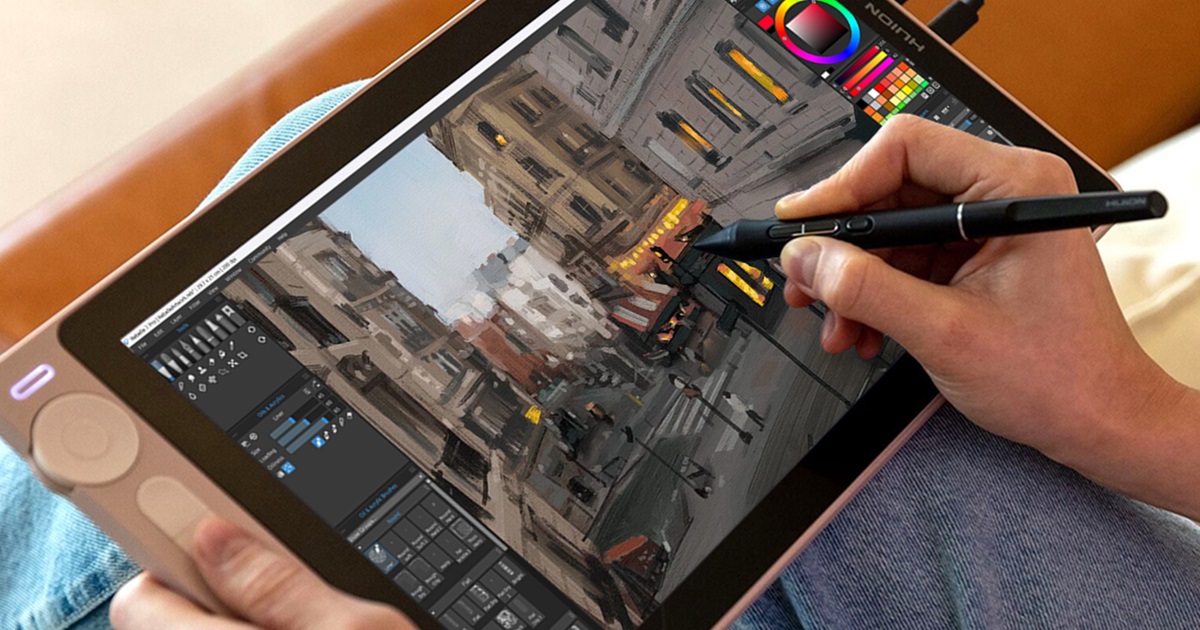

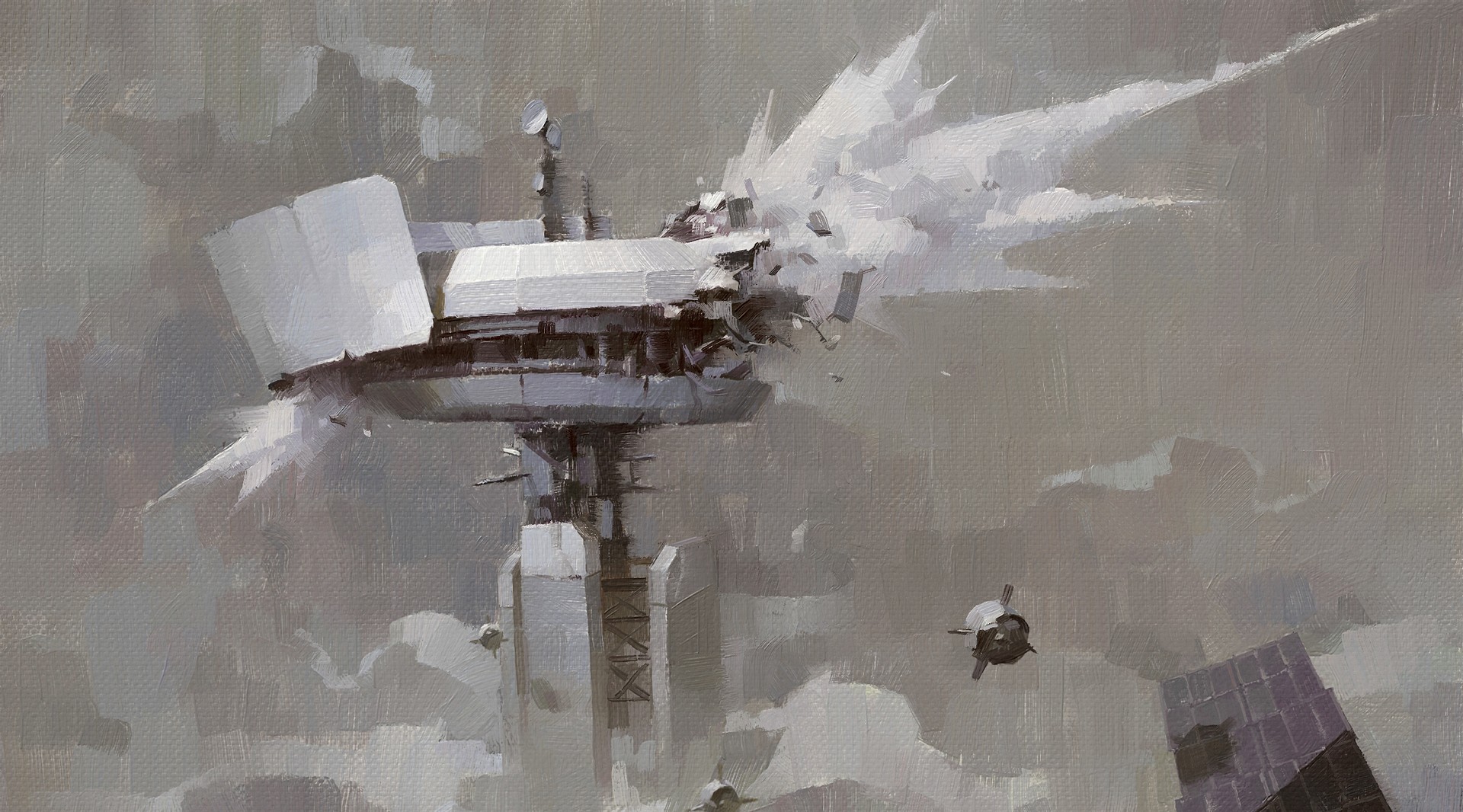

We are excited to introduce Rebelle Featured Artist Anton Tareev, a self-taught artist originally from Ukraine and now based in the Netherlands. In this interview, Anton reflects on his journey from online tutorials to professional game and illustration work, sharing insights on self-education, developing a visual voice, working in the industry, and why persistence matters more than talent.

Anton is a self-taught artist currently based in the Netherlands. In 2009, he left university to study digital painting through platforms like Gnomon and YouTube. Since 2012, Anton has been working remotely on various game projects, as well as creating artwork for publishers and TCGs. Later, he spent two years working as an outsourced artist on a project called Raid: Shadow Legends, followed by another four years as a senior artist in a full-time role.
You made the bold decision to leave university in 2009 and pursue digital painting independently. What convinced you that self-study was the right path for you?
At the time, I was doing graffiti and didn't have any specific plan in mind. I just had a feeling that the classical principles of arts didn't really fit the direction I wanted to move in. I knew for sure that I wanted to draw and paint, but I wanted to draw and paint something different. So I spent the next few years immersed in street art culture. Then, in 2010 (or around that time) a good friend of mine introduced me to the FZD School channel, which was just getting started. I think that was the real turning point for me.
"Any learning process should begin with basic theory. It helps us understand how the craft we want to master is structured. In our case, that basic theory means the fundamentals of perspective, as well as the fundamentals of light and shadow. This is a classic approach, and it has stood the test of time."
At that time, online art education was far less developed than it is today. What resources had the biggest impact on your learning? Can you remember a particular tutorial, instructor, or artist whose lessons dramatically accelerated your progress?
Yes, absolutely. Even though online education itself was much less developed back then, the internet community felt much more close-knit and welcoming, and that community had a huge influence on me. As for specific teachers, I would mention Feng Zhu and his FZD School channel, which I mentioned earlier, Scott Robertson and his perspective lessons, as well as lectures by the artists from Massive Black and The Gnomon Workshop.
Were there any skills that proved especially difficult to learn through tutorials alone?
I remember spending a lot of time studying Carl Dobsky's methods for constructing perspective. In general, I don't think drawing is something you can ever fully "master." You simply try to make each new piece a little better than the previous one… and that process continues indefinitely.
Online learning platforms have transformed dramatically over the past fifteen years. What improvements have you noticed in the quality of digital art education?
That's a very difficult question for me to answer, because I haven't been following the online education space for quite a long time. But I would recommend choosing courses from instructors who have real industry experience on major projects, rather than just beautiful images on social media.
How do you balance studying techniques from other artists while still developing a unique visual voice?
This is actually a sensitive topic for me. If I spend a lot of time looking at a particular artist's work, I inevitably start producing something similar. Not because I'm deliberately copying them, but because my visual library starts becoming dominated by imagery connected to their work. For the last year and a half, I've stopped looking at other artists’ profiles so that they don’t influence my own vision too much.
You began working remotely on game projects in 2012. What was your first professional opportunity, and how did you land it?
They were mostly random projects I found on freelance platforms. Some were one-off jobs, while others turned into longer-term collaborations.
What were some of the biggest lessons you learned during your early years in the game industry?
I think it was the realization that, on a large project, you stop being a "whole" and become a "part." You depend on the team, and the team depends on you. I understood that professional drawing is not entertainment. It is hard work.
How did your understanding of production art evolve once you began working on commercial projects?
I can point out one variable that clearly separates personal art from production art: time. In personal art, you can allow yourself to keep pushing a piece toward some idea of "perfect." In production art, that "perfect" will most likely have to become "good," or at least "acceptable," because of the project's deadlines. So you have to find a balance between the time spent on an image and the final result.
"The main strength of card illustrations is that they are not fleeting. A player will look at the image on a card for much longer than, for example, an image on a loading screen in a game. That means card illustrations can include subtle elements that may not be noticeable at first glance, but carry some hidden meaning."
In addition to game development, you've created artwork for publishers and trading card games. How does illustration work differ from game production work? What distinguishes a strong game artist from a strong illustrator?
In production work, creating an illustration is not always just about drawing. Sometimes you need to rework existing illustrations from the project and adapt them for different needs. Sometimes you use ready-made 3D models to achieve maximum similarity with specific game characters. You may also use photo bashing to make VFX look more appealing. And it is extremely important to match the overall style of the project. Card illustrations, on the other hand, usually offer more room for self-expression and more freedom, because you are not always tied strictly to a specific visual style.
What unique storytelling opportunities exist within a single card illustration?
I think the main strength of card illustrations is that they are not fleeting. A player will look at the image on a card for much longer than, for example, an image on a loading screen in a game. That means card illustrations can include subtle elements that may not be noticeable at first glance, but carry some hidden meaning. Over time, the player may notice them and experience new emotions. I think that's really cool.
How do you continue learning after already reaching a high professional level? Are there artistic skills or areas you are currently trying to improve?
Yes, I would like to improve my skills in composition and rhythm. In that regard, I really like some of the work by director Tarsem Singh. At the moment, cinema is actually my main resource for self-education in illustration.
If you could design the ideal learning roadmap for a young artist today, what would it look like?
In my opinion, any learning process should begin with basic theory. It helps us understand how the craft we want to master is structured. In our case, that basic theory means the fundamentals of perspective, as well as the fundamentals of light and shadow. This is a classic approach, and it has stood the test of time.
After that, I would shift almost entirely to practice. Based on my own experience, practice gives you much more than theory. For example, I spent a long time studying human anatomy, even down to the names of the bones. Eventually, I realized that the same muscle can look completely different on different people. A slight movement, a small turn of the torso, and all the muscles become distorted. I only really started to understand how the body works when I began drawing real people, rather than construction diagrams from books.
The same applies to color theory. There is no magical formula for color harmony. You can use every color in the world and end up with a muddy, dull image. Or you can use just three colors and create a beautiful picture that still feels colorful. Color is more about visual experience and feeling than about beautiful palettes.
Unfortunately, it's impossible to describe the entire learning process in just a few sentences, but my advice would be this: start with the basic theory, and then develop your visual taste and build a visual library through master studies, photo studies, and drawing from life. The most important thing is not to believe in nonsense like "talent." For example, my abstract thinking is really weak, even though it is incredibly important in creative professions. The exact sciences always came much more naturally to me. Despite that, I was still able to achieve some results in painting. Persistence is far more important than talent. As one wise person said, "When you work at the limit of your abilities, progress is inevitable."
Thank you, Anton, for describing the early years of your self-taught art journey. We are thrilled to see this path worked out to your benefit and we get to see your artwork in various projects. Best wishes with your continued art journey.
Happy Painting,
Escape Motions Team
-----
Learn more about Anton Tareev: escapemotions.com/featured-artists/anton-tareev

What do you think?
0 Responses
0
Upvote
0
Funny
0
Love
0
Surprised
0
Angry
0
Sad
Sign in to comment!
Be the first to comment.