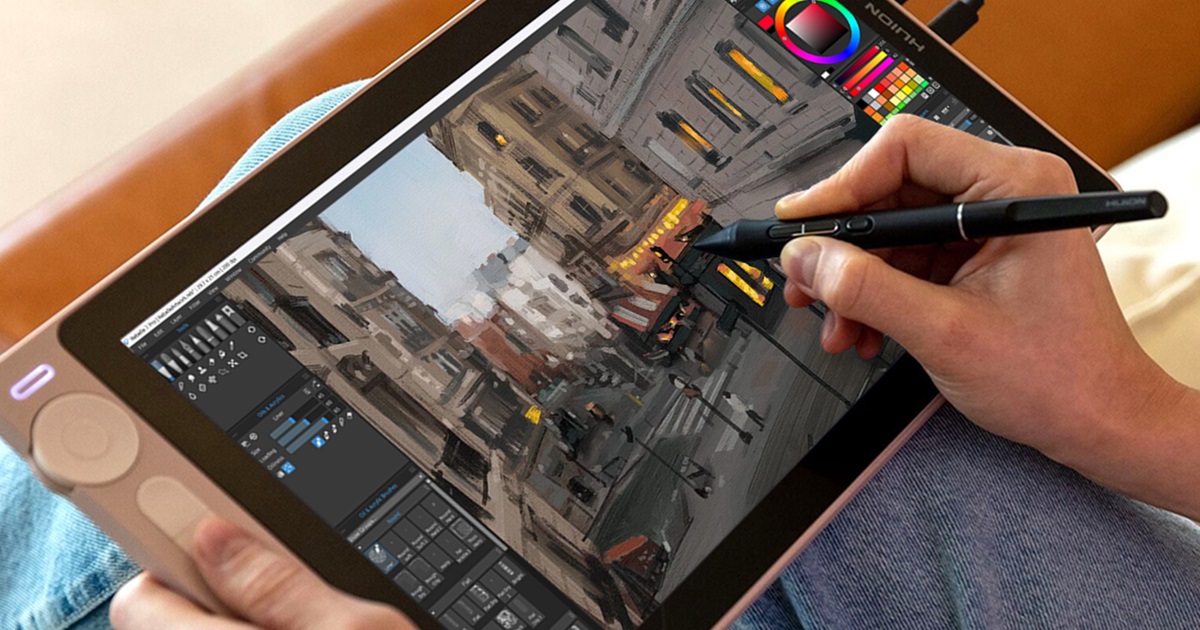

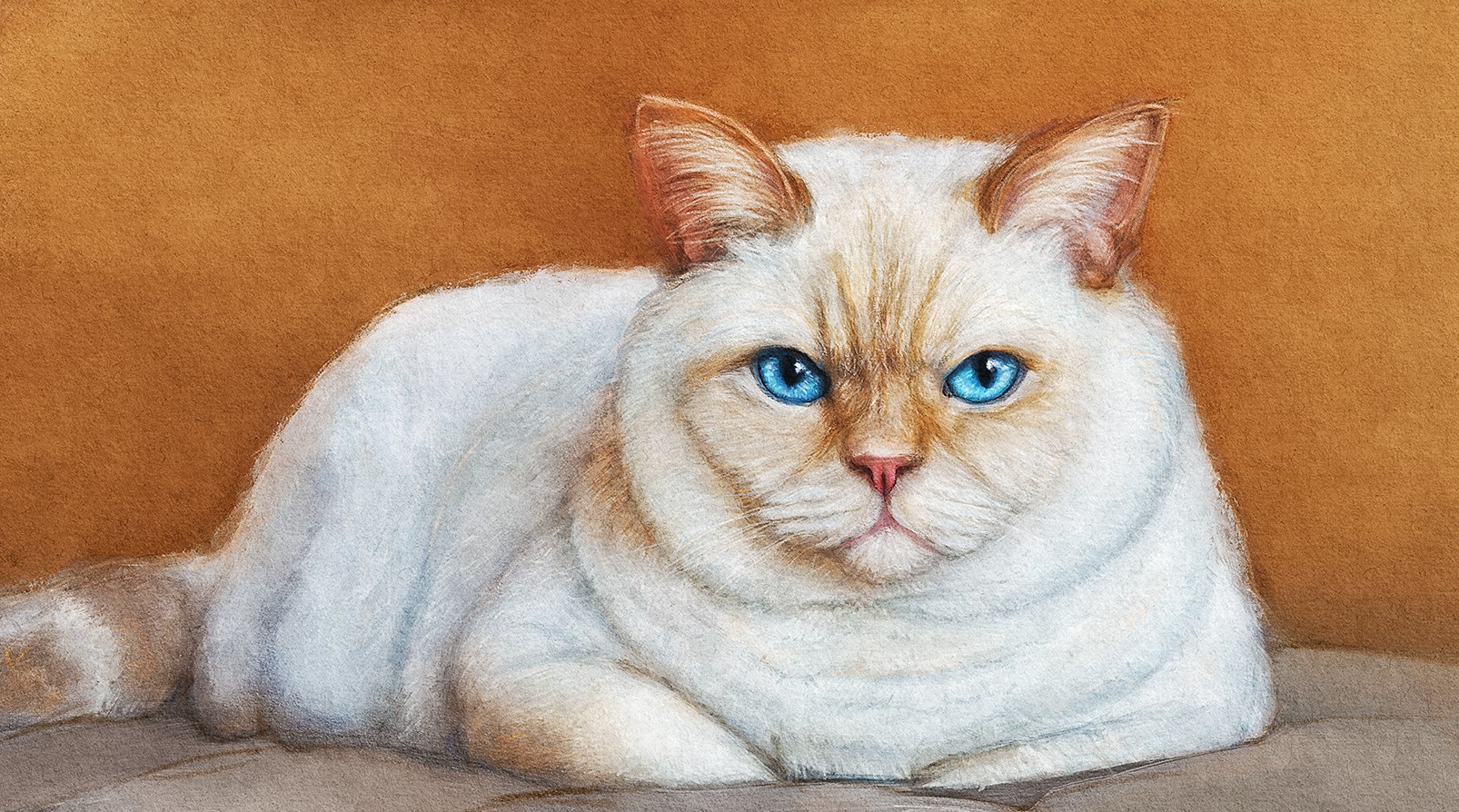

It is a great pleasure to introduce Jerry Groschke, 3D designer, animator, and Rebelle Featured Artist. We are in awe of his animal portraits, as they authentically resemble the looks and character of each model. Learn about the challenges animal portraiture brings and how a career in 3D helps him achieve the desired results in painting.

Jerry is a 3D designer, animator, and modeler who has built his professional career in the digital realm while nurturing a deep connection to art in his personal time. In his animal portraits, he aims not only to depict physical likeness but to convey the inner character and presence of each creature. Through his paintings, he explores organic forms and quiet moments from nature, offering a contrast to the precision and structure of his digital work. Alongside his work, he dedicates much of his free time to playing the piano and painting.
Jerry, you work professionally as a 3D designer, animator, and modeler, yet you dedicate much of your personal creative time to painting. How do your experiences in 3D design and animation influence the way you approach painting?
One of the most valuable lessons I've carried over from 3D modeling into painting is learning to think in forms and volumes first, and details second. When creating a 3D model, you usually start with a simple base shape. At that stage, there are no colors, textures, or fine details. The focus is entirely on proportions, volume, and spatial structure. Only later do additional layers appear: refined forms, materials, textures, lighting, and finally the render.
For a long time, I approached painting oppositely. I often started with details immediately, trying to perfect an eye or a section of fur before the overall image was established. Individual areas could look convincing, but the finished painting often lacked depth and a strong sense of form. Working in 3D taught me to build a painting much like a sculpture: first establish the large shapes and values, then develop the volumes, and only later add details and color. This approach gives a painting much more depth and life.
Your paintings often focus on animals and natural subjects. What first inspired this fascination?
I think what fascinates me most is the authenticity of animals. They don't try to be anything other than what they are. At the same time, every animal has its own character that can be discovered and expressed.
Nature itself is also a constant source of inspiration. The closer you look, the more interesting shapes, colors, and structures you find. For me, animals and nature never become boring and always offer new challenges.
"Working in 3D taught me to build a painting much like a sculpture: first establish the large shapes and values, then develop the volumes, and only later add details and color. This approach gives a painting much more depth and life."
What role does observation play in your artistic process, especially when painting animals? Do you work mainly from photographs, sketches, direct observation, or a combination of sources?
Careful observation is at the heart of everything I do, although the way I use it depends on the subject. For animal portraits, I work mainly from photographs. My goal is to portray the specific animal as authentically as possible. A portrait should not simply show a dog or a cat, it should show that particular dog or cat. That's why I pay close attention to characteristic features, proportions, markings, and expression.
For landscapes and more personal work, I often use nature photography as inspiration. Images I find on platforms like Pinterest serve as a starting point for mood, lighting, or composition, and I combine different influences into a new image.
Regardless of the subject, observation remains one of the most important parts of the creative process. The better you learn to see, the more convincingly you can translate a subject into a painting.
As mentioned, your goal is not only to capture physical likeness but also the inner character of an animal. How do you approach revealing personality through a portrait?
Before I start painting, I spend quite a bit of time studying the reference photos and looking for the small details that make the animal unique. Reference images play a crucial role throughout the entire painting process. I'm constantly comparing the painting to the original reference.
Often it's the subtle details that matter most: a particular look, the position of the ears, the tilt of the head, or the overall expression. These are the characteristics that make an animal instantly recognizable to its owner. Especially in commissioned work, my goal is not only to paint an anatomically correct animal but to create a portrait that feels like meeting that animal face to face.
Are there certain animals that are particularly challenging to portray emotionally? Why?
I wouldn't say that certain species are inherently more difficult to portray than others. Every animal and every portrait presents its own unique challenges. I approach each new painting with a certain amount of respect. At the beginning of a project, I often don't know whether the image will ultimately succeed. Some paintings seem to develop almost on their own, while others require far more patience and revision. And yes, some paintings end up in the trash. For me, that's simply part of the creative process and an opportunity to learn and improve.
"Fur and feathers are really just the surface. The way they fall, gather, and catch light is determined by what lies underneath. Understanding anatomy and volume makes the surface appear far more believable. Because of that, I always try to understand an animal as a three-dimensional form before focusing on fur, feathers, or fine details."
Fur is one of the most distinctive elements in your animal portraits. What are the most common mistakes artists make when painting fur?
From a painter's perspective, very light and very dark fur are among the most difficult subjects. White fur is surprisingly challenging because you have to show subtle shifts in value and color without making it look flat. Black fur presents the opposite challenge: creating enough structure and depth while keeping its dark appearance.
The most common mistake is treating fur as individual hairs. Many artists try to paint hair by hair right from the start and lose sight of the larger forms. Fur works like many other surfaces: the forms, light, shadow, and volume must be correct first. Only then should the finer textures and details be added. White fur isn't simply white, and black fur isn't simply black. Both contain a surprising variety of color and value shifts that make them look natural and alive.
Are there particular brushes, tools, or methods that help you achieve natural-looking fur, or is it primarily about observation and technique?
I don't think there's any magic brush for painting fur. Rebelle already provides everything I need. Observation, an understanding of form, and solid technique are far more important than the tools themselves.
Among Rebelle's brushes, I most frequently use Express Oils – Filbert Glaze. For fine hairs and accents, I often use Charcoal Line. I also make extensive use of Line Smoothing. The longer the fur, the more smoothing I apply to achieve natural and flowing strokes. One small tip I often share is using the Sharpen filter very subtly near the end of the process. Used carefully, it can enhance existing textures and add extra clarity to the fur.
Does your background in 3D modeling help you understand the underlying structure beneath fur, feathers, and anatomy?
Absolutely. In 3D work, understanding the underlying structure of a body is essential. Before a model becomes convincing, the volume underneath, skeleton, muscles, and major anatomical forms, must be correct. This way of thinking has strongly influenced my painting. Fur and feathers are really just the surface. The way they fall, gather, and catch light is determined by what lies underneath. Understanding anatomy and volume makes the surface appear far more believable. Because of that, I always try to understand an animal as a three-dimensional form before focusing on fur, feathers, or fine details.
"I work almost entirely digitally because it simply suits the way I like to work. Mistakes are easy to correct, ideas can be tested quickly, and the entire process is more efficient. The reason I use Rebelle is pretty simple: it's just fun to paint with."
If one of the animals you've painted could somehow react to its portrait, what would you hope it 'recognized' about itself?
With most animals, I would probably just hope not to get bitten, licked, or eaten. Haha.
Watch on YouTube: youtu.be/hGJ6Yy1pPac
What lessons from traditional painting have improved your digital work, and vice versa?
My first experiences were with traditional media such as pencil, charcoal, acrylics, and oils. Those fundamentals still help me today. Understanding form, light, shadow, edges, and brushwork applies equally whether you work on paper, canvas, or a graphics tablet.
These days I work almost entirely digitally because it simply suits the way I like to work. Mistakes are easy to correct, ideas can be tested quickly, and the entire process is more efficient. The reason I use Rebelle is pretty simple: it's just fun to paint with. The interface is logical, approachable, and easy to understand, even without being a rocket scientist. Open the software, paint, be happy!
Ultimately, I don't see traditional and digital painting as opposites. The fundamentals are the same; only the tools differ. At this stage, digital painting simply offers the possibilities that fit my way of working best, although I can certainly imagine returning to brush and paper one day.
Thank you, Jerry, for letting us peek into the world of animal painting with you. We can't wait to discover the character of more animals through your portraits.
Happy Painting,
Escape Motions Team
-----
Learn more about Jerry Groschke: escapemotions.com/featured-artists/jerry-groschke

What do you think?
0 Responses
0
Upvote
0
Funny
0
Love
0
Surprised
0
Angry
0
Sad
Sign in to comment!
Be the first to comment.