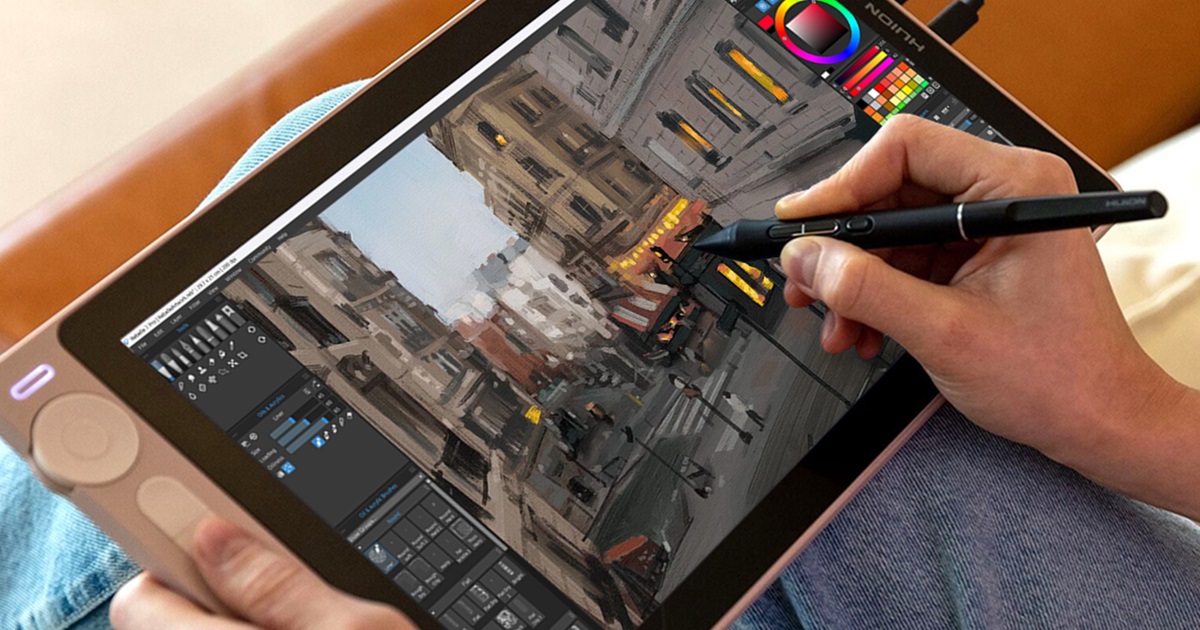
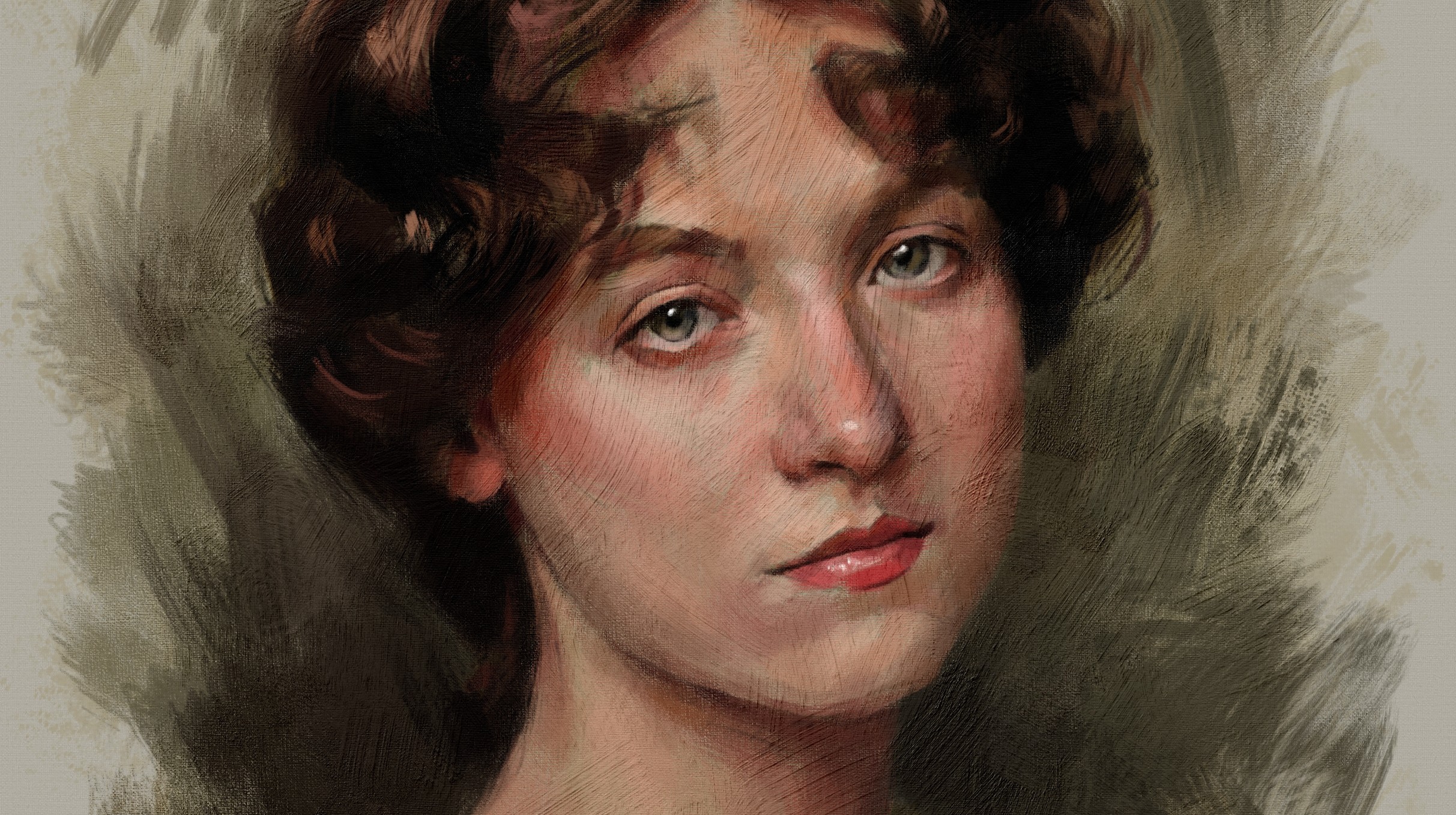

William Bouguereau's paintings are admired, debated, copied, and criticized, but beneath the polished surfaces lies a disciplined approach that transcends style. Rather than imitating his finished work, Rebelle Featured Artist Jacinto September explores the principles behind his process and demonstrates how they can enrich a contemporary digital painting workflow in Rebelle, blending traditional painting logic with the freedom of digital media.
Watch on YouTube: youtu.be/_8uUMLQu4Js
William-Adolphe Bouguereau (1825–1905) was a leading figure of the French Academic tradition, known for his highly polished technique, idealized figures, and mastery of drawing. Trained at the École des Beaux-Arts, he built his work on careful observation, structured composition, and a methodical painting process that emphasized clarity and control. His approach to the ébauche and finish stages makes his work especially valuable for study, offering insight into how complex forms can be developed with precision and deliberate decision-making.
Tools Used for Bouguereau's Study
For this study, let's keep Rebelle tools intentionally simple. The palette is not a reconstruction of Bouguereau's materials, but a controlled setup designed to prioritise value clarity over color complexity.
The aim is to reduce early decision overload so that structure and form remain the focus throughout the painting. In Rebelle, where brush behaviour naturally introduces texture and blending, this restraint becomes essential to maintain control. Most importantly, the tools are secondary. The main goal is to create a space where decisions are clear and intentional from start to finish.
Download brushes for this study made by Jacinto September.
Drawing Stage
The drawing stage is all about structure. At this point, the focus is purely on proportion, gesture, and spatial accuracy. This foundation is critical, as Bouguereau's clarity comes from precise underlying construction. Everything is placed deliberately so that later stages can build without correction or confusion. If the drawing is weak, every stage after it becomes compromised, no matter how refined the painting process is. Spending more time resolving the drawing at this stage reduces the need for adjustments later, which helps maintain confidence throughout the process. It also creates a clear roadmap, allowing the transition into paint to feel controlled.

Underpainting Stage
The underpainting strengthens the value relationships and begins to suggest form. The painting starts to feel more dimensional, even though surface detail is still absent. This stage acts as a bridge between loose construction and controlled modelling. In Rebelle, subtle blending helps unify transitions, but the focus remains on preserving the structure of form.
By the end of this stage, the painting should already feel stable in light and form. At this point, the painting begins to hold together as a semi-complete image, even without refinement. This stability allows the next stage to focus purely on development, rather than correction, which allows this process to feel intentional.
Ébauche Stage
An ébauche is a French term meaning a draft or rough outline. In art, it refers to an initial colored underpainting. In horology, it describes an unfinished watch movement. Synonyms include sketch, outline, rough draft, or, in technical use, a blank or workpiece.
The ébauche establishes the first colour-value structure. The image is simplified into large light and shadow masses, with midtones used only to connect forms. The goal is clarity of structure rather than surface description. At this stage, everything is still adjustable, so edges remain soft, and relationships are prioritised over detail. This is where the painting starts to feel unified, even in a very rough state. For this study, Jacinto uses a custom bristle brush with an opacity between 50% - 70%. This allows for a soft base that can be worked into. Keeping the painting simple here prevents unnecessary complications later, as strong value grouping carries through every stage that follows. It also allows the focus to remain on simplicity, ensuring the painting works even before the modeling stage begins.
Modeling Stage
Form is developed more deliberately. Transitions between light and shadow are refined to describe volume, and edges are controlled to establish hierarchy. The aim is not necessarily detail, but convincing structure and form. This gives space for subtle shifts in value and temperature. At this point, control becomes more important than speed or complexity. Working slowly here ensures that each adjustment supports the overall structure rather than distracting from it. The focus is also to reinforce what has already been placed during previous stages.

Final Stage
The final stage is refinement, not addition. Edges are adjusted, values are corrected, and focal areas are clarified where needed. What stands out most from Bouguereau is the consistency of decision-making across every stage. Each step supports the next logically. This study is about applying that same clarity of process within a digital workflow, focusing on structure and intention rather than imitating the artist exactly. Restraint becomes the most important skill, as overworking can quickly disrupt the balance I established in earlier stages. The goal is to bring the painting to a resolved state without losing clarity and control.

The real value of studying Bouguereau lies in understanding how structure, restraint, and control can guide the entire process. Explore this for yourself, follow along with the tutorial and try applying these stages in Rebelle. Keep the setup simple, stay focused on value and structure, and let each step do its job. The goal is to experience how a clear, structured workflow can change the way your paintings come together.
Happy Painting,
Escape Motions Team
-----
Learn more about Jacinto September: escapemotions.com/featured-artists/jacinto-september
Download brushes for this study: escapemotions.com/products/rebelle/brushes/download.php?file=brushesgroup&name=670
Reference image credits: pin.it/PK8I5Iddk

What do you think?
0 Responses
0
Upvote
0
Funny
0
Love
0
Surprised
0
Angry
0
Sad
Sign in to comment!
Be the first to comment.