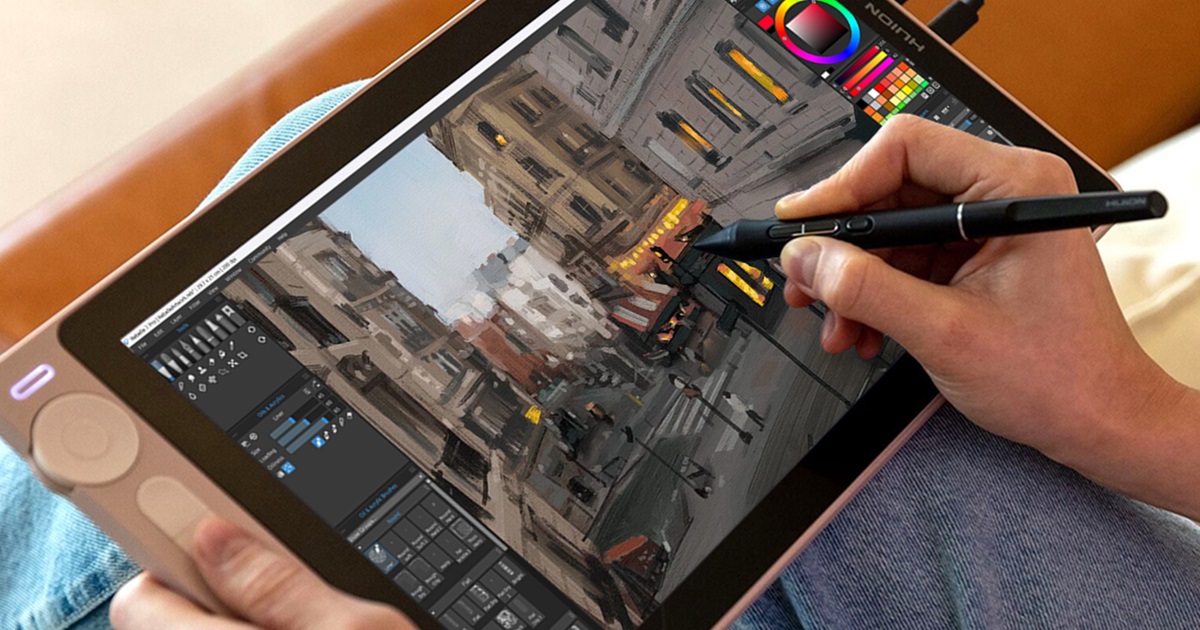

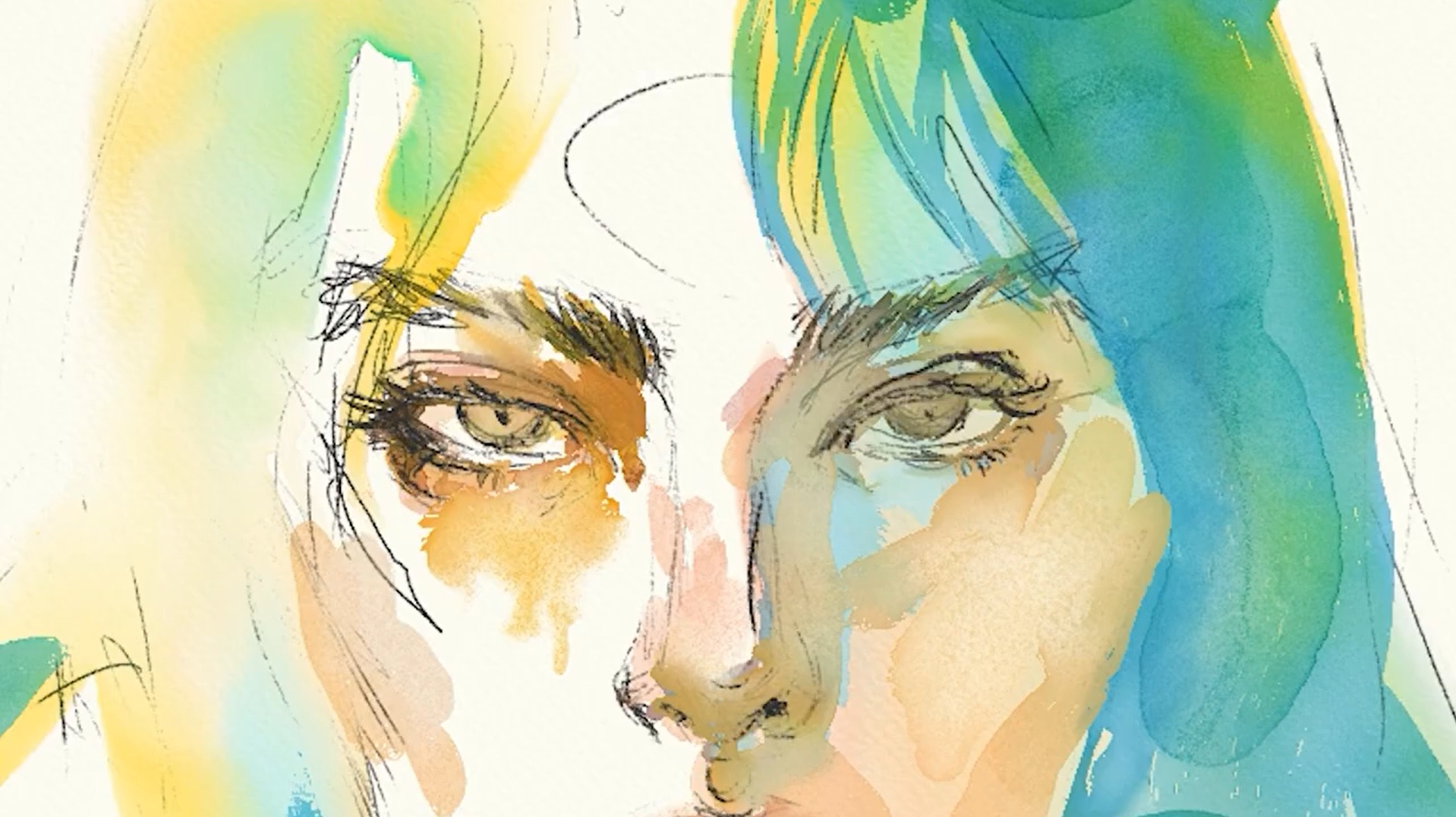

Mixing mediums sounds exciting in theory. You imagine expressive watercolor washes, beautiful pencil textures, and rich oil paint all working together to create something unique. The reality can be much different. In this tutorial, Rebelle Featured Artist, Ludovico Clovis, shares his tips on a successful mixed-media painting.
Watch on YouTube: youtu.be/VKgn9jlDlMI
"Before thinking about brushes, textures, or color, you need to solve the composition. Many paintings fail long before paint ever touches the canvas. Weak compositions create problems that no amount of rendering can fix. That's why the first step is creating simple compositional plans, not beautiful marks."
Using a Pencil to Design Attention
Most artists think of a pencil as a tool for drawing proportions. While that's certainly important, pencil has another job that's often overlooked: directing attention.
Not every line should carry equal importance. When every mark is the same thickness, darkness, and level of detail, the viewer doesn't know where to look. The drawing becomes visually flat before painting even begins. Instead, think about creating a focal point from the sketch stage. Darker lines naturally attract attention. More detailed areas stand out against simpler ones. Even subtle differences in line weight can guide the eye toward important features. This idea connects to a larger principle that applies throughout the entire painting process: contrast creates interest.
By simplifying less important areas and concentrating detail around the focal point, the painting immediately becomes easier to read.
Predetermining Detail Before You Paint
One of the most valuable things a pencil offers is the ability to establish the level of detail before painting begins. This influences the entire piece.
If you carefully define eyelids, eyelashes, and facial planes during the drawing stage, you'll naturally continue working at that level of detail throughout the painting. Likewise, if the sketch remains loose and simplified, the final painting will usually follow suit. Many artists don't realize how much their initial drawing influences their eventual result. By deciding early where detail will exist and where it won't, you create a roadmap for the entire painting process.
This also helps strengthen your focal point. Darker lines, sharper details, and more defined forms can all be concentrated in areas you want viewers to notice first.
Giving Each Medium a Job
One of the biggest mistakes artists make when working with mixed media is trying to make every medium equally important. This usually creates confusion. Instead, think of your painting as having a dominant medium supported by secondary mediums. Sometimes watercolor is the star. Sometimes it's oil. Sometimes the entire piece is driven by pencil or charcoal. The key is making that decision before you begin.
When watercolor is the dominant medium, the goal is to push the watercolor stage much further. Transparency remains important, and oil is used sparingly to enhance specific areas.
When charcoal or pencil takes center stage, watercolor becomes an accent. It supports the drawing rather than competing with it.
When oil is dominant, watercolor often functions as an underpainting, providing color variation and texture that the oils can build upon later.
The strongest mixed-media paintings usually have a clear hierarchy. One medium leads. The others support.
"A strong understanding of color harmony helps tremendously. When colors are chosen from a harmonious palette, even unexpected watercolor interactions tend to remain visually pleasing."
Making Watercolor Work for You
Watercolor can feel unpredictable, but it becomes much easier to manage when approached systematically. Rather than jumping immediately into strong colors, begin with lighter, less saturated washes. This approach gives you room to adjust and refine. It also prevents accidental color mixtures from becoming overwhelming. Desaturated colors tend to coexist more peacefully, making them ideal during the early stages of a painting. As the painting develops, saturation and opacity can gradually increase. This allows color relationships to evolve naturally rather than becoming overpowering too early.
A strong understanding of color harmony also helps tremendously. When colors are chosen from a harmonious palette, even unexpected watercolor interactions tend to remain visually pleasing. One of the most useful insights many artists discover is that watercolor doesn't always have to appear in the final painting to be valuable. Many professionals use watercolor primarily during the planning phase. Instead of risking experimental color combinations on a finished piece, they create multiple watercolor studies first. These small explorations allow them to test ideas, discover unexpected combinations, and push creative boundaries without consequence.
Watercolor's unpredictability becomes an advantage rather than a liability. By the time they begin the final painting, they already know which direction works best.
"Oil should respond to what's already been established. The watercolor layer provides information. It suggests color relationships, mood, and direction. Oil paint simply develops those ideas further."
Reintroducing Pencil After Painting
A surprising mistake many artists make is abandoning pencil the moment paint appears. In reality, a pencil can remain useful much longer than people realize. After watercolor has established color relationships and major shapes, pencil can return to reinforce structure, clarify details, and sharpen focal areas. This creates a powerful combination. Watercolor provides atmosphere and softness while pencil restores clarity and precision. The result often feels more controlled and intentional than relying on paint alone.
Using Oil as a Refinement Layer
When it's time to introduce oil paint, the goal isn't to start over. Instead, oil should respond to what's already been established. The watercolor layer provides information. It suggests color relationships, mood, and direction. Oil paint simply develops those ideas further.
This is where many artists go wrong. They ignore the watercolor beneath and begin painting as though they're working on a blank canvas. A better approach is to enhance what already works. Increase saturation where needed. Refine focal points. Strengthen edges. Clarify forms. Let the watercolor continue contributing to the final result.
Traditional painters often use oils as a control layer, balancing precision against the spontaneity of earlier stages.
A Repeatable Mixed-Media Workflow
A successful mixed-media painting doesn't happen because watercolor, pencil, and oil were used together. It happens because each medium contributed something unique to the final image.
The process begins with composition. Pencil establishes structure, detail, and focal points. Watercolor explores color, atmosphere, and spontaneity. Pencil can then return to reinforce drawing where necessary. Finally, oil paint refines, enhances, and unifies the painting while preserving what made the earlier stages interesting. When each medium has a purpose, the process becomes surprisingly straightforward.
Instead of fighting against three different tools at once, you're simply allowing each medium to do what it does best. And that's often the difference between a chaotic mixed-media experiment and a painting that feels intentional, cohesive, and complete.
Happy Painting,
Escape Motions Team
-----
Ludovico Clovis is a digital and traditional figure painter. His style is influenced by the visible brushwork and color usage of the impressionist painters, mixed with different abstract techniques. When he isn’t working digitally, he is using oils, acrylics, watercolor, and charcoal.
See his portfolio: www.escapemotions.com/featured-artists/ludovico-clovis

What do you think?
0 Responses
0
Upvote
0
Funny
0
Love
0
Surprised
0
Angry
0
Sad
Sign in to comment!
Be the first to comment.