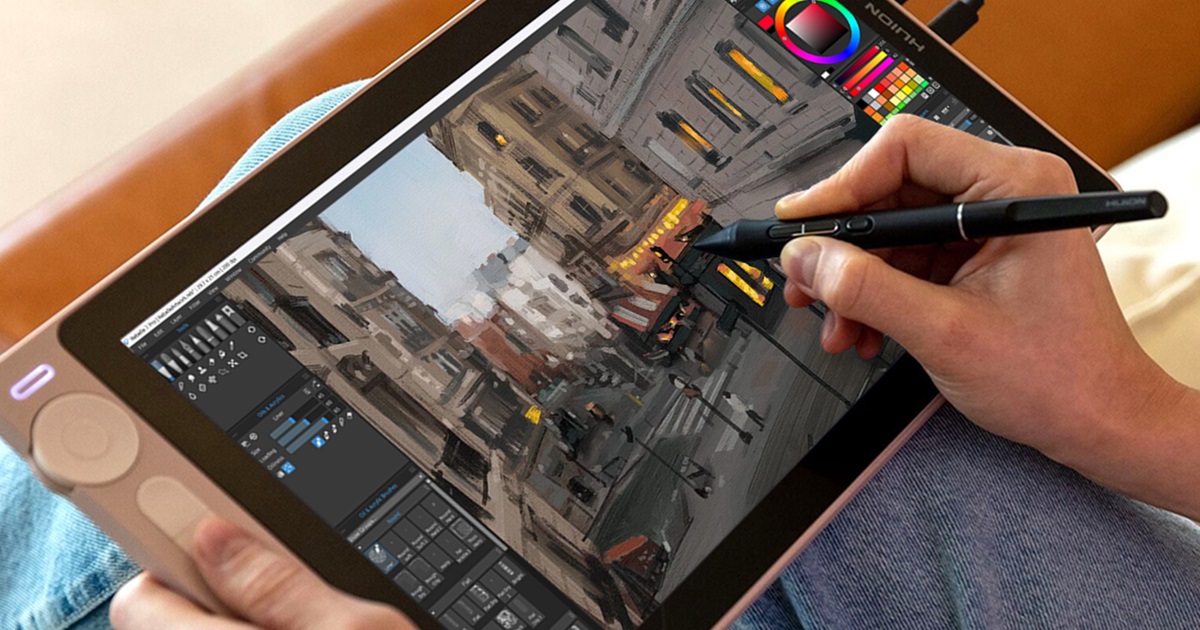

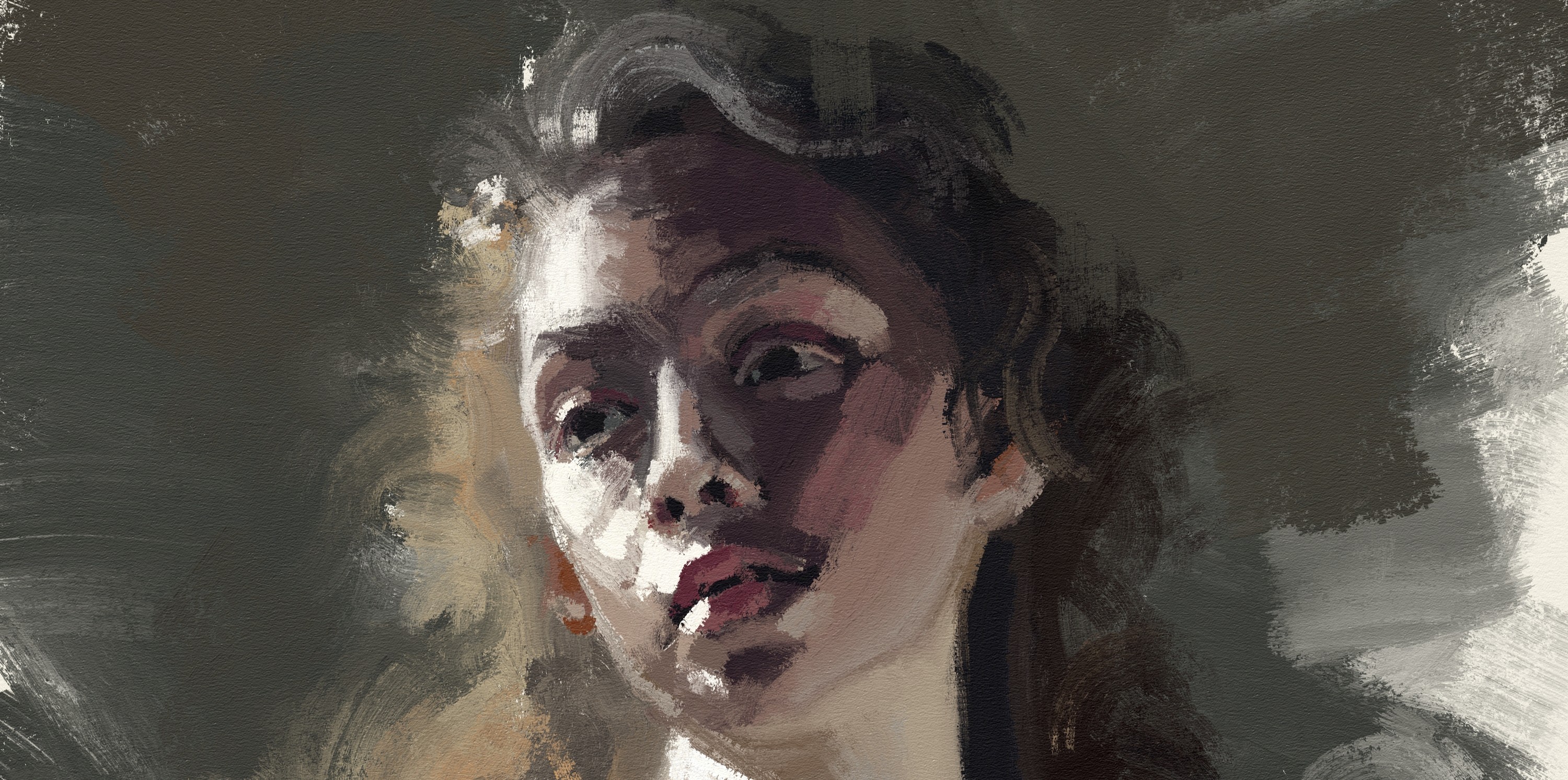

Many artists are drawn to Rebelle because it offers the opportunity to recreate the look and feel of traditional painting in a digital environment. A common assumption is that achieving this goal requires following every step of a traditional painting workflow. In reality, that approach is often unnecessary. In this tutorial, artist Ludovico Clovis shares three traditional habits that had the greatest impact on both his digital and traditional work: understanding form, simplifying values, and organizing color.
Watch on YouTube: youtube.com/watch?v=qlD_Zl9kSs0
Focus on Form before Details
One of the most common misconceptions about realism is that it depends on rendering every tiny feature perfectly. Eyelashes, wrinkles, pores, and fine details certainly have their place, but they rarely determine whether a painting feels convincing.
Strong paintings are built on an understanding of three-dimensional form. Rather than treating facial features as isolated elements, traditional painters think in terms of planes and volume. Every surface faces a slightly different direction, catching light differently depending on its orientation. Those relationships between light and form create the illusion of depth.
This approach naturally simplifies the painting process. Instead of attempting to describe every small detail individually, larger forms establish the structure first. The forehead, nose, cheeks, and chin become connected volumes rather than separate objects, making lighting decisions clearer and more consistent. Interestingly, paintings often appear more realistic even though they contain fewer rendered details.
Let the Brush Reinforce Structure
Brush selection influences more than just texture. It shapes the way form is interpreted throughout the painting.
Round brushes naturally encourage smooth transitions and soft blending. While useful for many applications, they can also make it easier to lose the clarity of larger forms as individual brushstrokes blend.
Flat brushes encourage a different way of thinking. Each stroke naturally describes a plane, making it easier to visualize the changing angles of the subject. Rather than soft gradients defining the face, distinct brushstrokes communicate its underlying structure. The result is a painting that feels constructed rather than simply shaded.
This method reflects a common habit among traditional painters: building forms first and allowing detail to emerge naturally from the larger structure.
Simplify with Value Grouping
Once the forms are established, the next priority is organizing the values. A common challenge for developing artists is trying to capture every subtle shift in light immediately. Shadows become fragmented into countless tones, highlights receive individual treatment, and the overall structure quickly becomes difficult to control.
Value grouping offers a much simpler solution.
Instead of working with dozens of separate values, the painting is reduced into a few major groups. One group represents the shadows, another defines the midtones, and a third establishes the highlights. Smaller variations are introduced only after these larger value masses have been organized.
This approach dramatically reduces complexity while making the painting easier to read from a distance. It also strengthens the illusion of form, since the major light and shadow relationships remain clear throughout the process.
Build Strong Paintings with Simple Value Studies
Value grouping becomes especially valuable during the planning stage. Before considering color or rendering, a simple black-and-white thumbnail can quickly reveal whether a composition is working. Large value shapes establish the focal point, determine where the viewer's eye travels, and create a balance between areas of visual activity and rest.
Many successful paintings change surprisingly little after this stage. Once the value structure is solid, the remaining work becomes a matter of refinement rather than constant correction.
Planning with values creates a reliable roadmap that guides every decision made later in the painting.
Don’t Chase Color, Organize It
Once values are established, color becomes much easier to manage. One common habit among beginners is continually selecting new colors from the color picker. While this may seem logical, it often produces paintings where colors feel disconnected from one another.
Traditional painters typically approach color differently. They begin with a base mixture and gradually create subtle variations from that foundation. Every new mixture remains connected to the original, producing natural harmony across the painting.
This principle, often called color grouping, simplifies the entire painting process. Rather than managing dozens of unrelated colors, you're working within a family of closely related hues that naturally belong together.
Creating Rich Color Through Small Variations
One of the most beautiful qualities of traditional painting is the subtle vibration of color that appears when you look closely. Skin isn't a single flat tone. It contains delicate shifts toward warmer reds, cooler purples, softer oranges, and muted yellows.
The important part is that these variations stay within the same overall value group. From a distance, the face appears unified. Up close, however, the surface comes alive with countless subtle color changes.
This effect becomes much easier to achieve when every variation begins with the same base mixture. Rather than jumping randomly between unrelated colors, you're gently nudging one color toward another while preserving the overall harmony. The painting gains richness without becoming chaotic.
One advantage of working in Rebelle is its natural pigment-mixing system. Instead of relying exclusively on the color picker, colors can be mixed much like traditional paint, producing gradual transitions and intermediate hues that feel organic. Because each new mixture evolves from the previous one, color harmony develops naturally throughout the painting.
From Planning to Painting
Once the composition, values, and color groups have been established, the painting process becomes much more straightforward. The composition has already been resolved. The major value relationships are in place. The color families have already been chosen. At this stage, painting becomes an exercise in refinement rather than constant problem-solving.
Working from large shapes toward smaller forms allows the image to develop naturally. As the painting progresses, subtle color variations strengthen the forms while preserving the underlying structure established during the planning stage.
This process removes much of the uncertainty that often accompanies painting and replaces it with a clear sequence of intentional decisions.


What's surprising is that these habits improve both digital and traditional painting equally well. They're not tied to a specific medium. They're principles of observation and design. Once they become part of your process, painting begins to feel less like solving hundreds of tiny problems and more like assembling a series of simple, intentional decisions. And that's often the point where your work starts looking not only more traditional, but also more confident and more personal.
Happy Painting,
Escape Motions Team
-----
Ludovico Clovis is a digital and traditional figure painter. His style is influenced by the visible brushwork and color usage of the impressionist painters, mixed with different abstract techniques. When he isn’t working digitally, he uses oils, acrylics, watercolor, and charcoal.
See his portfolio: www.escapemotions.com/featured-artists/ludovico-clovis

What do you think?
0 Responses
0
Upvote
0
Funny
0
Love
0
Surprised
0
Angry
0
Sad
Sign in to comment!
Be the first to comment.