

We are thrilled to introduce Rebelle Featured Artist, illustrator, and comic artist, Valentin Kopetzki. In this interview, Valentin explains the perks and challenges of working in a team of two, while giving an insight into his successful career spanning over three decades.
Valentin lives in Germany and has worked successfully as an illustrator and comic artist for the past 30 years. After many years in the field of humorous comics and cartoons, he discovered the possibilities of digital art in 2013. Since then, he has increasingly focused on painting fantasy and science fiction pieces, as he has always been an avid reader of these genres. In 2019, he won a prestigious Spectrum Fantastic Art Award. A few years ago, he also discovered his passion for traditional art, especially oil painting, and has been working ever since to give his digital pieces a more organic, natural feel.
What originally drew you to visual storytelling, and what were your earliest artistic influences?
The earliest influences I can remember are actually comics. As a kid, I could spend entire days just reading them. First, it was Donald Duck, Asterix, Spirou, Tintin, and later superheroes, especially Batman and Spider-Man, Moebius, Jodorowsky, and a whole lot more. I think around age 10 or 11, I started drawing my own comics. The idea of telling a story through pictures absolutely captivated me.
"With landscapes, I can just jump in and see what happens. It doesn't even matter if something in my painting looks a bit different from the reference or from real life. There is no right or wrong, just different interpretations."
You spent many years creating humorous comics and cartoons. What lessons from that period still shape your work today, even when painting more serious fantasy or science-fiction subjects?
Maybe the general approach is to do quick first sketches for composition. That's really crucial in cartoons, you want to check fast whether an idea actually works. Sometimes I do the same thing with other pieces, but sometimes I just dive straight in without any sketch at all.
Interestingly, I've noticed the influence going the other way too. With cartoons and comics, I used to just go by gut feeling. Everything was equally colorful and equally detailed, and sometimes you didn't even know where to look first. It was only through painting other subjects that I picked up a lot of the fundamentals, which I then brought back into my humorous work as well.
Classical landscape painting and portraiture have become important interests for you as well. What do these subjects offer that fantasy illustration does not?
For me, these subjects are freed from the pressure of having to tell a story. With narrative pieces, I sometimes get stuck before I even start because I can't find the right idea. With landscapes, I can just jump in and see what happens. It doesn't even matter if something in my painting looks a bit different from the reference or from real life. There is no right or wrong, just different interpretations.
Portraits are a bit of a different story, especially when I'm actually going for likeness and recognizability rather than something more abstract. But in return, portraits carry human emotion in a much more direct way and create an immediate connection with the viewer. Both types of subjects have a certain timelessness to them that I really love._normal.jpg)
Are there recurring themes or ideas that continue to appear throughout your work, even unintentionally?
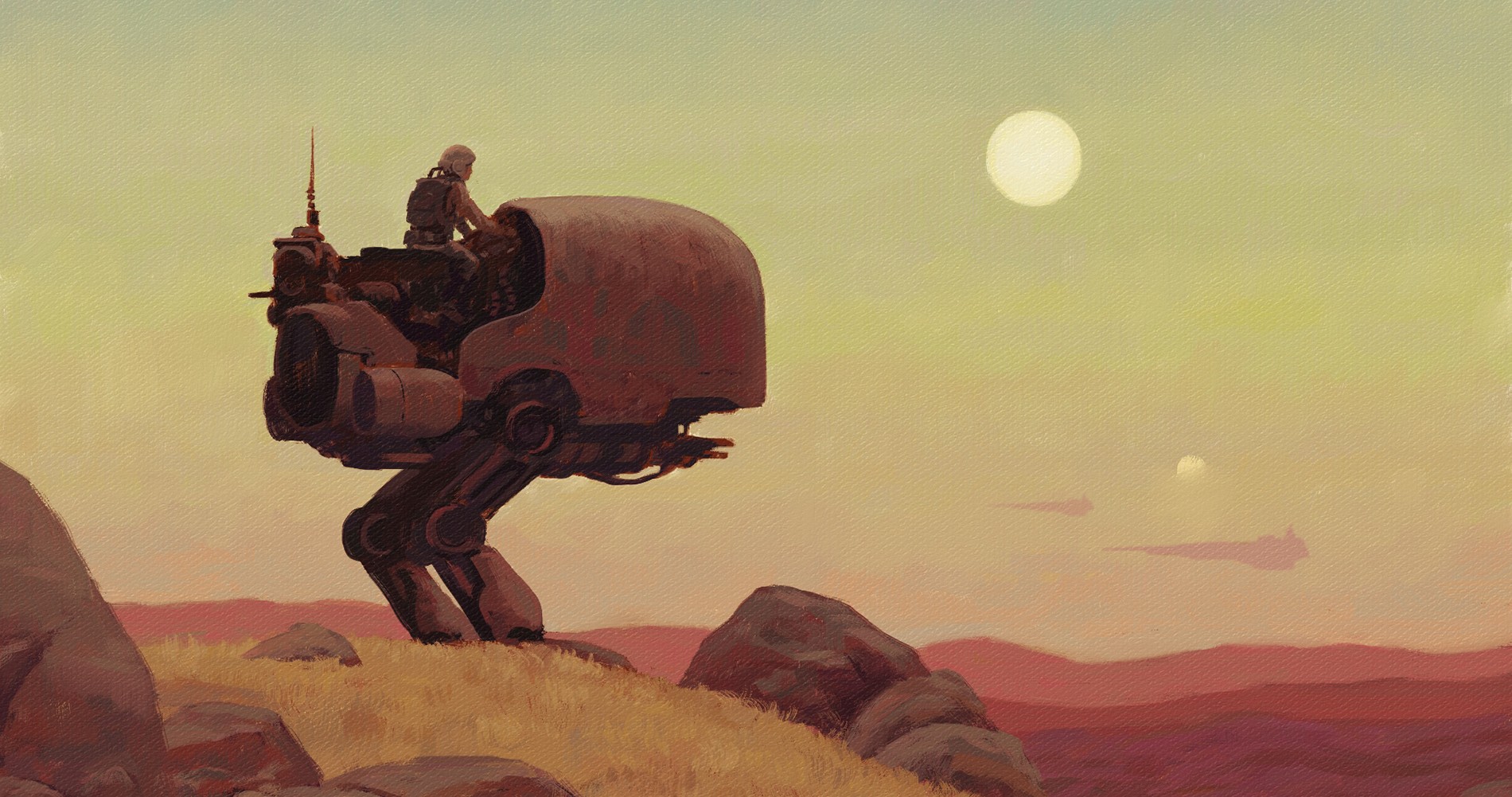
Oh yeah, definitely. I seem to have a serious soft spot for sci-fi settings, vehicles, spaceships, and robots. I'm pretty sure even my very first comic had a spaceship in it. That's probably down to early exposure to Star Wars, Alien, and Blade Runner, those films really left a mark on me. I also love it when things look a bit beat-up, rusty, and worn out. I find that way more visually exciting than some sleek, polished future-designer scenario. That goes for other subjects too, I'd much rather paint a half-crumbling barn than a shiny sports car.
In 2013, you began exploring digital painting more deeply. What sparked that transition, and what possibilities did digital art open up for you?
Back in the nineties and early two-thousands, my partner Jens and I were pretty deep in our comic bubble. We'd been making funny comics about the German techno scene for years and had a massive fanbase, partly because our stuff got published regularly in the relevant magazines. Then, at some point, I started coming across people on social media doing concept art tutorials, and that was a real eye-opener for me. Suddenly, there were people with skills I desperately wanted to learn, working on subjects I was really into.
In our world, everything had to be tied to techno somehow, and since we were known for our humor, everything had to be funny too. And it wasn't just comics and cartoons, there were also endless flyers and posters for parties and clubs. After years of that, it started feeling a bit limiting, and honestly, sometimes a bit exhausting. So I started experimenting with other stuff in my spare time and learned an incredible amount over the following years. In the end, it was a benefit for us as an illustration agency too, because we could suddenly offer more than just our signature comic style.
"I think it's incredibly valuable to always have a second opinion on hand during the creative process. It's also just easier when you don't have to handle all the stuff that comes with being self-employed entirely on your own."
You and Jens Bringmann have worked together successfully for more than 30 years. What do you think is the secret to such a long-lasting creative partnership?
In our case, the business partnership is only one part of it, we've also been best friends for a very long time. I think it helps a lot when you share similar tastes in many things, whether that's books, films, art, or humor. On top of that, you obviously need to be able to take criticism, especially when you're collaborating on creative stuff every single day. We don't even sit in the same room all day anymore, since he moved to Berlin a few years ago. In the past, we'd often jump into each other's process way too early, but now we can get feedback exactly when we ask for it. That actually makes a huge difference.
What advantages does a two-person creative team have over working as a solo artist?
I think it's incredibly valuable to always have a second opinion on hand during the creative process. It's also just easier when you don't have to handle all the stuff that comes with being self-employed entirely on your own. Writing proposals, bookkeeping, keeping the website updated - all the things that need to get done - we can always split them up and share the load.
When working on a project together, how do you divide responsibilities? What happens when you disagree creatively? How do you resolve differences in artistic vision?
On some projects, the division of tasks and responsibilities is pretty clear-cut, simply because we have different areas of expertise. Sometimes we also let the clients decide when we each prefer a different version, that's honestly the easiest solution. As hired illustrators, we have to deliver a service at the end of the day.
With our cartoons, if there's ever a disagreement, the person whose idea the joke was gets the final say. That just kind of evolved over the years, and it works really well. But honestly, most of the time we're on the same page anyway.
Having worked through major shifts in the industry, from traditional illustration to digital painting and now AI-driven tools, how do you view the changing role of technology in art?
In general, technology has given us massive advantages in illustration compared to the old days, so I'm genuinely grateful that we now have so many tools and options available. With AI, though, I see things differently. Leaving aside the fact that big tech companies have basically looted the entire art world without permission and without any consequences, I also just don't see the point in skipping the creative process entirely, which is where the best ideas actually come from, and jumping straight to a result in seconds. My hope is that the AI boom will trigger a backlash and handmade work, even in the digital space, will gain value again.
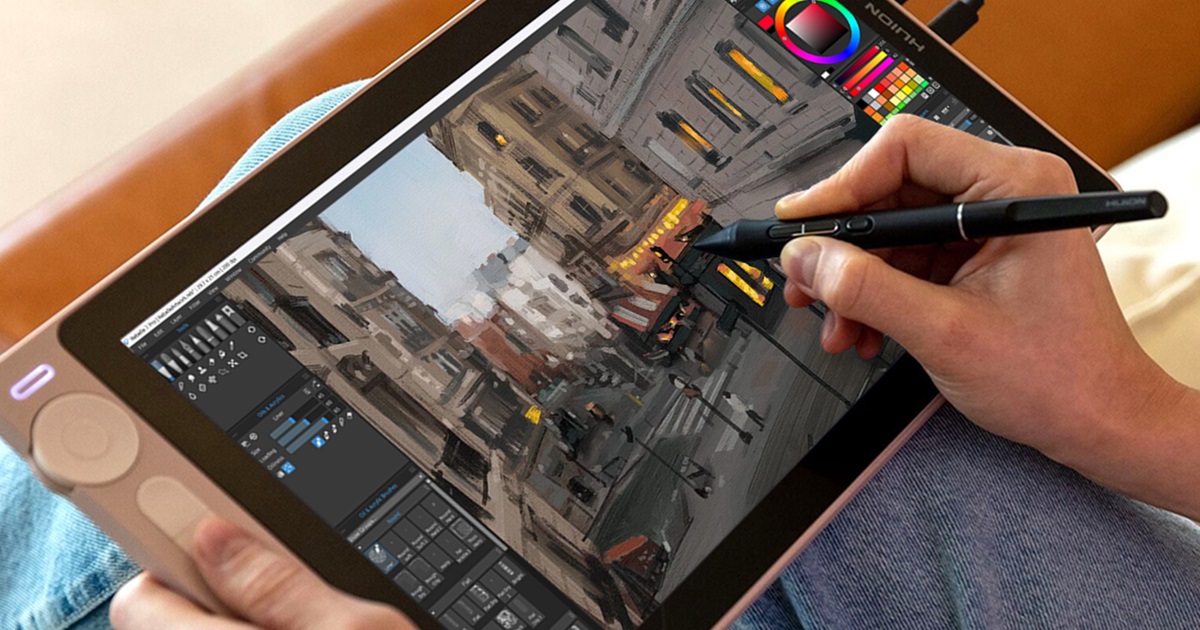
There's already been a trend in digital art for a while now where paintings were supposed to look more traditional. At some point, digital artists all started looking at classical oil painting and realized those works just felt somehow more alive and interesting. All the textures from brushes and palette knives, the structure of canvas or paper, translucent underpaintings, blended colors, it all looked so much more exciting. Suddenly, there were tutorials everywhere on how to imitate Richard Schmid in Photoshop and that kind of thing. That really spoke to me, because I never really liked that slick digital look anyway.
Rebelle has now taken that traditional painting feel to a whole new level, and even if it sounds a bit paradoxical, I hope that with even more advanced software, digital painting will also become simpler and more accessible. Ultimately, technology in the creative space should allow quick, direct access to bring your ideas to life.
What excites you most about the future of illustration, comics, and digital painting?
For us as a team, it's probably the opportunity to excite old and new fans through our own projects and to become a little more independent from illustration commissions. For me personally, it would also be my own artistic development, both technically and in terms of subject matter. I've learned a lot over the years, but I think anyone who paints knows that feeling of constantly hitting their own limits. Pushing those limits further and further is definitely the most exciting part of the artistic journey.
Thank you, Valentin, for opening the doors to your creative space and introducing your work. We hope there are many exciting projects on the horizon! Best wishes to you and your artistic partner, Jens.
Happy Painting,
Escape Motions Team
-----
Learn more about Valentin Kopetzki: escapemotions.com/featured-artists/valentin-kopetzki

What do you think?
0 Responses
0
Upvote
0
Funny
0
Love
0
Surprised
0
Angry
0
Sad
Sign in to comment!
Be the first to comment.