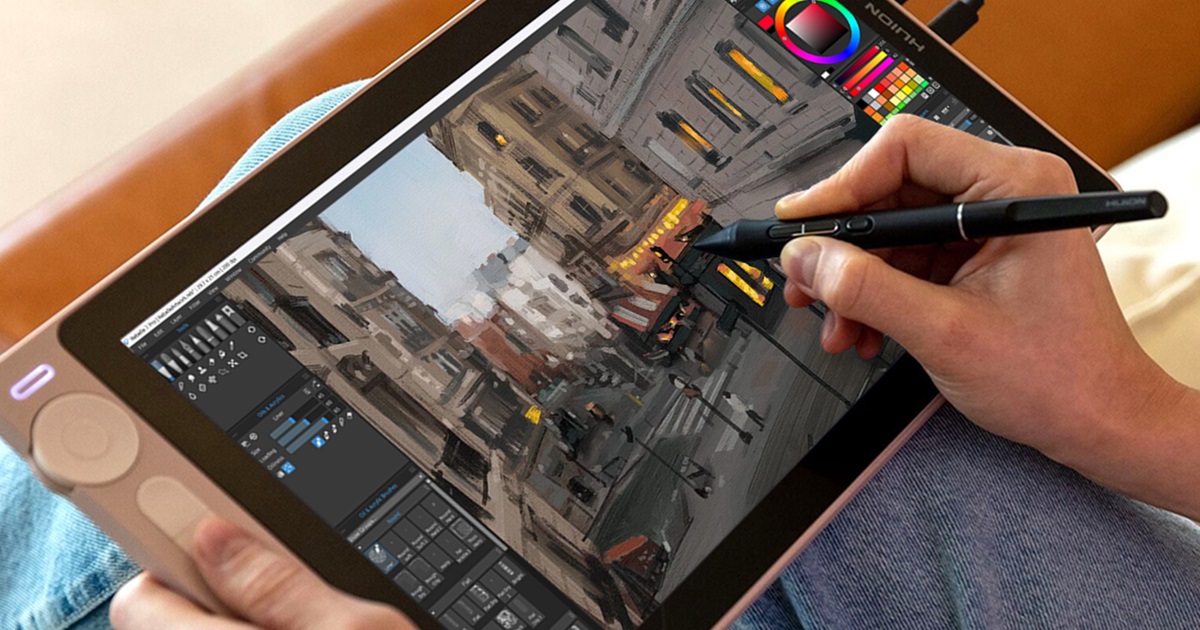
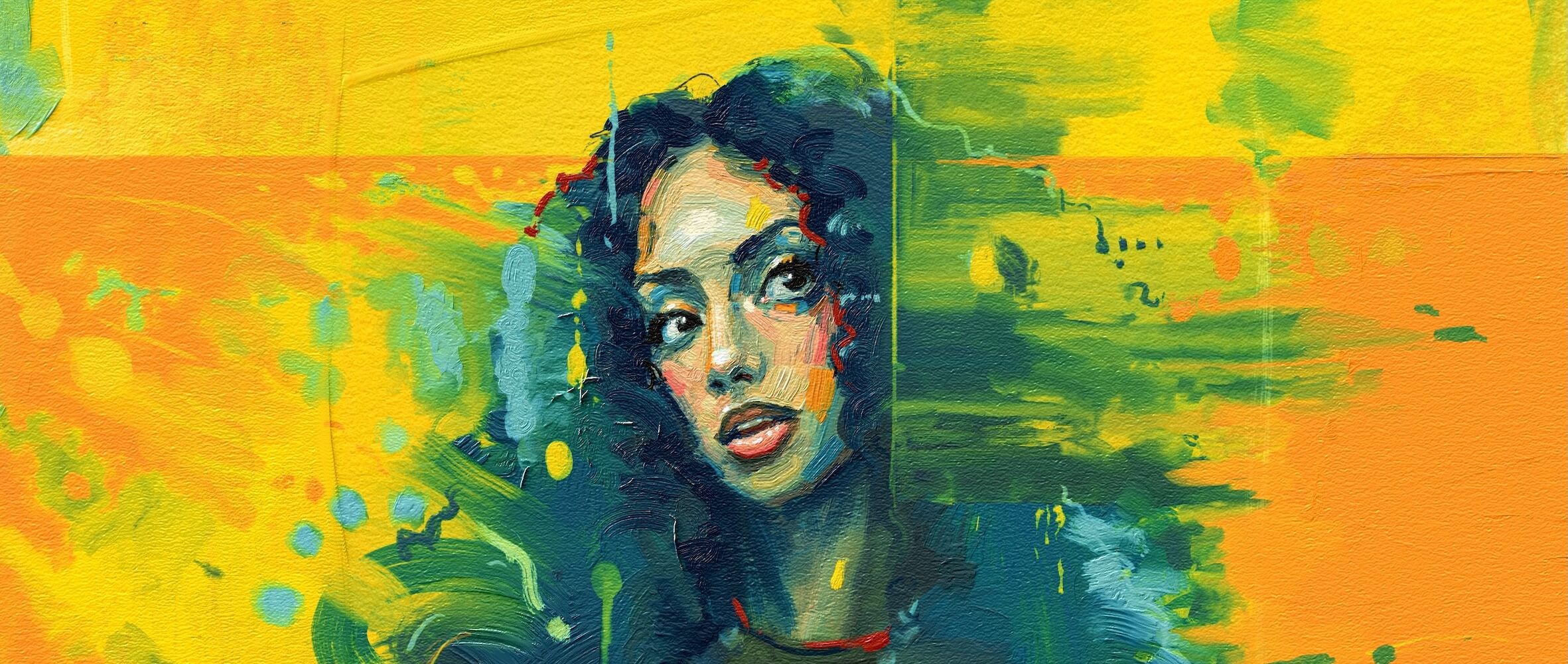

Muddy colors and flat results are a common frustration in digital painting, even with powerful tools at hand. The key difference often lies in one essential concept: mixing paint directly on the canvas. In this second part of the tutorial series, Featured Artist Ludovico Clovis shows how to apply traditional color-mixing techniques in Rebelle to achieve richer, more natural results.
Watch on YouTube: youtu.be/vOEuEUI6mB8
Revisit part 1 of this series on our blog or YouTube channel.
Color Mixing on Canvas
In traditional painting, especially with oils, colors rarely exist in isolation. They blend, bleed, and interact in ways that create depth and visual interest. Translating that into digital work requires a shift in approach. Instead of carefully mixing the perfect color beforehand and placing it down, mixing on the canvas encourages you to let colors interact after they’ve been applied. This can mean blending, smudging, or layering paint in a way that mimics real-world behavior. This approach introduces a level of unpredictability, and that’s exactly what makes it powerful. When you stop trying to control every outcome, your work begins to feel more organic and expressive.
"Instead of placing final colors immediately, you build your painting gradually. Colors blend into one another naturally, creating soft transitions that feel painterly rather than digital."
Wet on Wet Approach
The soft transitions that emerge from blending directly on the canvas closely resemble traditional techniques like wet-on-wet painting, where artists build form and color simultaneously. It also opens the door to textures and marks that are nearly impossible to replicate with clean, isolated brush strokes.
However, this freedom comes with a challenge. Without a solid understanding of color behavior, it’s easy to fall into the trap of muddy colors. This is where color theory becomes essential. At its core, painting is a balance of contrasts, light against dark, warm against cool. These contrasts guide the viewer’s eye and define the focal point of an image. When colors are mixed carelessly, especially those opposite each other on the color wheel, they tend to neutralize into browns or grays. While these tones have their place, uncontrolled mixing can quickly dull an entire painting. Color mixing on canvas from dark to light. Unblended on top, blended on the bottom
A more intentional approach involves staying closer on the color wheel when blending. Subtle shifts in temperature, like pushing a blue slightly toward purple instead of orange, help maintain vibrancy while still introducing variation. Interestingly, those “muddy” tones can actually become an asset when used deliberately. They are often found in skin tones, shadows, and less important areas of a composition, where they create a visual contrast that allows more saturated colors to stand out.
The technique itself begins with a mindset shift. Instead of placing final colors immediately, you build your painting gradually. A wet-on-wet approach allows you to lay down darks and lights early, then refine them as they interact. Colors blend into one another naturally, creating soft transitions that feel painterly rather than digital. This method encourages thinking in terms of relationships rather than isolated values. Wet on wet approach: unblended color shifts on the left, blended on the right
"By working carefully between transitions, you can blend colors while preserving their identity. Using large brushes for movement and atmosphere, and smaller ones for precision and structure."
Blending and Smudging
Blending plays a central role, but it requires control. Using a large brush can create beautiful, sweeping transitions and help push areas into the background. It’s particularly effective for simplifying forms or reducing detail in less important parts of the image. At the same time, it can easily destroy the structure if overused. When too many colors are mixed with a broad stroke, both value and hue begin to collapse, resulting in that familiar muddy look.
A smaller brush offers a different kind of control. By working carefully between transitions, you can blend colors while preserving their identity. This helps maintain the underlying form and ensures that your painting retains depth and clarity. The key is knowing when to switch between these approaches. Using large brushes for movement and atmosphere, and smaller ones for precision and structure. Color blending with a big brush (on the left) vs. a small brush (on the right)
"Brushes often carry traces of previous colors, and those subtle remnants create unexpected and beautiful variations in each stroke. These streaks and shifts add richness and complexity."
Dirty Brush
One of the most effective techniques for achieving natural variation is the use of a dirty brush. In traditional painting, brushes often carry traces of previous colors, and those subtle remnants create unexpected and beautiful variations in each stroke. Rebelle can replicate this with a dirty brush option for Oils & Acrylics. As you paint, colors from the canvas mix into your brush, producing streaks and shifts that add richness and complexity. Bristle brushes can have a color noise, which adds color variations to each bristle or stroke. These effects not only enhance realism but also make each brushstroke feel more alive.
Apply This to Your Painting Process
A strong workflow supports all of these techniques. Starting with a limited color palette helps maintain harmony across the painting. Many artists find it useful to mix a dominant color into every mixture, creating a subtle unity that ties the entire image together. Building a range of color variations rather than relying on a single tone allows for more nuanced transitions as you work.
As the painting develops, it helps to think of the process as sculpting rather than drawing. You begin with midtones, gradually introducing darker shadows and lighter highlights. With each step, you refine the form, often using smaller brushes as details become more important. This gradual build-up mirrors traditional methods and reinforces a sense of depth.
Edge control becomes another powerful tool. Soft, blended edges tend to recede into the background, while sharp, defined edges draw attention. By carefully choosing where to blend and where to preserve crisp strokes, you can guide the viewer’s focus without relying solely on color or value. A face, for example, might feature sharper edges and clearer transitions, while surrounding elements dissolve softly into the background.
One of the advantages of mixing on the canvas is the ability to correct mistakes fluidly. A highlight that feels too strong can be blended back into the surrounding tones without leaving a harsh boundary. This flexibility encourages experimentation. You can push areas too far, then pull them back, often discovering new textures and effects in the process.
Texture itself becomes an important part of the visual language. Scraping, erasing into paint, or introducing irregular marks can break up overly smooth areas and add character. These elements often bring more interest than perfectly rendered details, especially in areas that aren’t meant to be the focal point.
Ultimately, mixing on the canvas transforms digital painting into something more dynamic and engaging. It bridges the gap between digital precision and traditional expressiveness, allowing artists to embrace both control and spontaneity. The process becomes less about placing perfect colors and more about responding to what’s already on the canvas.
There is no need to fear mistakes in this approach. In fact, the willingness to blend, repaint, and experiment is what leads to the most compelling results. Over time, this method not only improves technical skill but also develops a more intuitive understanding of color, form, and composition.
The more you lean into this process, the more your digital paintings will begin to feel like real paint, rich, textured, and full of life.
Happy Painting,
Escape Motions Team
-----
Ludovico Clovis is a digital and traditional figure painter. His style is influenced by the visible brushwork and color usage of the impressionist painters, mixed with different abstract techniques. When he isn’t working digitally, he is using oils, acrylics, watercolor, and charcoal.
See his portfolio: www.escapemotions.com/featured-artists/ludovico-clovis

What do you think?
0 Responses
0
Upvote
0
Funny
0
Love
0
Surprised
0
Angry
0
Sad
Sign in to comment!
Be the first to comment.